Jigawa State has rolled out one of Nigeria’s most comprehensive farm mechanization programmes, deploying 300 tractors, 60 combined harvesters, and digital booking infrastructure across 60 service centres statewide, as the state targets 3.6 million metric tonnes of rice annually by 2030.
 Written by S David Prince
Over 11.5 million rural Nigerians have benefited from improved road access under RAAMP, with 1,500 kilometres of rural roads completed and another 2,500 kilometres targeted by December 2026, the Minister of State for Agriculture and Food Security, Sen. Dr. Aliyu Sabi Abdullahi, said in Abuja.

 Written by AgriAxis.ng
The Federal Ministry of Livestock Development has trained 100 small-scale dairy farmers in Ibadan on best practices, as Nigeria works to double annual milk output to 1.4 million metric tons by 2030 under the National Livestock Growth Acceleration Strategy.
 Written by AgriAxis.ng
The World Agriculture Forum Nigeria has inaugurated a Country Council in Abuja to drive coordinated action on agriculture, food systems, and rural development, with Executive Director Dr. MJ Khan calling it a turning point for Nigeria’s food security dialogue.
 Written by AgriAxis.ng
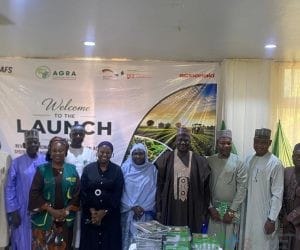
ActionAid Nigeria has trained over 135,000 smallholder farmers, women, and youths in agroecology and climate-resilient farming across several states, Country Director Mr. Andrew Mamedu announced at a national town hall in Abuja.
 Written by S David Prince
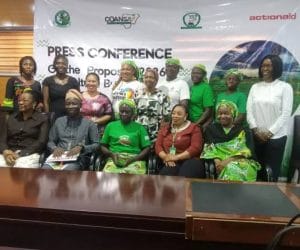
ActionAid Nigeria, SWOFON, and COANSA fault the proposed N1.45 trillion agriculture budget, raising concerns over transparency and inclusion of smallholder farmers.
 Written by AgriAxis.ng
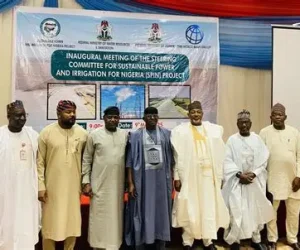
Nigeria and the World Bank launch the $500m SPIN project to rehabilitate 40,000 hectares of irrigated farmland and modernise over 400 dams for year-round food production.
 Written by AgriAxis.ng
Nigeria’s Agriculture and Livestock ministers say digital platforms, AI, and embedded finance will drive farm productivity and close the country’s credit gap below 4%.
 Written by S David Prince
FAO warns between 27.2 and 35.7 million Nigerians face acute food insecurity by August 2026, driven by conflict, climate shocks, and rising food prices in the north