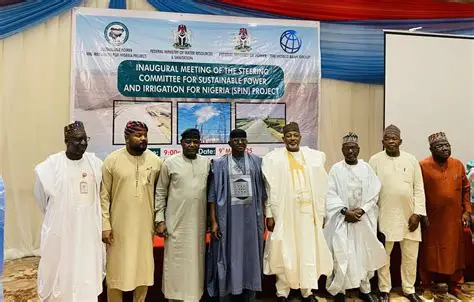
Nigeria and the World Bank officially launched the $500 million Sustainable Power and Irrigation for Nigeria (SPIN) project on March 10, 2026, in Abuja, targeting a major overhaul of the country’s irrigation systems, dam safety, and hydropower infrastructure.
The Minister of Water Resources and Sanitation, Prof. Joseph Utsev, flagged off the project and described it as a strategic intervention to move Nigeria from rain-fed agriculture to year-round, climate-resilient farming.
The project will rehabilitate about 40,000 hectares of irrigated land and address deteriorating conditions across Nigeria’s more than 400 dams, many of which are heavily silted. Roughly a quarter of newly irrigated farmland is currently lost each year due to poor maintenance and water management, officials said.
SPIN consists of four components: institutional strengthening of water management agencies, modernisation of irrigation systems, improvements to dam operations and safety, and project management to ensure accountability.
The World Bank Country Director for Nigeria, Mr. Mathew Verghis, said the project builds on the earlier Transforming Irrigation Management in Nigeria (TRIMING) project, which reached 1.7 million people and covered 14,000 hectares.
“Public investment alone cannot meet food security needs. Private investment is crucial to improve water efficiency, farmer incomes, and productivity,” said World Bank Global Director for Water, Mr. Saroj Jha.
Nigeria has 3.14 million hectares of irrigable land, but less than 20 percent of that is currently in use. Expanding irrigation is part of the government’s push for self-sufficiency in staple crops like rice and a reduction in food imports.