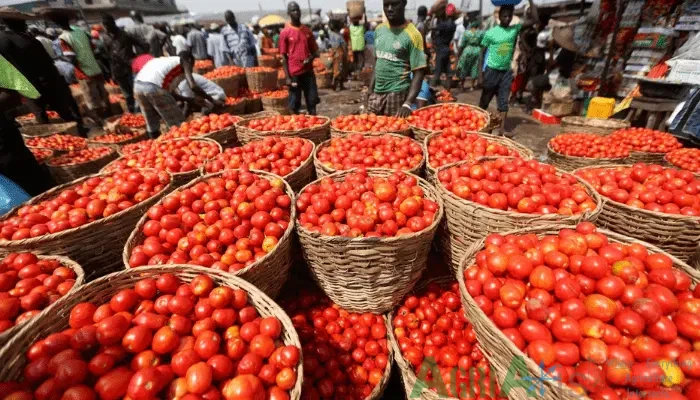
A 50-kilogram basket of tomatoes that sold for between N35,000 and N40,000 in Lagos just last month now costs between N115,000 and N125,000, the Kaduna State Chairman of the Tomatoes Growers and Processors Association of Nigeria (TOPAN), Mr. Rabiu Zuntu, confirmed on Tuesday.
The price surge, which has left food vendors scrambling and households reaching for alternatives, was not unexpected.
Mr. Zuntu had warned on April 10 that tomato prices would become very expensive come May and June, saying there is always a scarcity within that period. The prediction has now landed.
The immediate cause is the end of the harvest season across northern Nigeria’s major producing zones.
With most northern farms done for the cycle, the market is running on whatever limited volumes remain from a handful of locations still active.
Supply has not just tightened. It has, by Mr. Zuntu’s account, dropped sharply enough that price is now being set by scarcity rather than by normal seasonal variation.
“There is scarcity of tomatoes at the moment. Production has ended in most parts of the North, and we now rely on minimal harvests from a few areas,” he said.
The price movement at source tells the full story. The same 50kg basket selling for between N115,000 and N125,000 in Lagos is going for between N50,000 and N70,000 in the North right now.
In January, the same quantity cost between N7,500 and N10,000 at source. That is a price increase of between six and nine times over four months, before the produce has even moved south.
By the time it moves south, logistics absorb the rest. Transporting a trailer load of tomatoes from the North now costs about N2 million, up from between N1.1 million and N1.3 million just two months ago, driven by fuel prices.
That N700,000 to N900,000 increase per trailer does not disappear. It transfers, in full, to whoever buys at the other end.
Consumers in Lagos are already feeling it.
Mrs. Ranti Adisa, a food vendor in the Shasha area, said many traders had no stock at all when she visited Ile-Epo market.
“A crate sold for between N45,000 and N50,000, compared to N15,000 a few weeks ago,” she said, adding that the situation might push vendors to seek alternatives to tomato-based cooking.
Mrs. Oluchi Ogunsanmi, a resident of FESTAC, described buying a small bucket for N7,000 and finding it barely sufficient.
“We may have to consider alternatives,” she said.
Mr. Zuntu said relief is coming, but not soon. Fresh harvests from the next planting cycle are expected from July, and prices should begin to ease from August as supply recovers.
Until then, the market will be priced by what little is available.
The structural problem behind the seasonal price swing remains the same one it has always been: Nigeria produces enough tomatoes over the full year but lacks the cold chain and processing infrastructure to carry surplus from peak season into the lean months.
A crate that costs N15,000 during harvest and N50,000 six weeks later is not a farming problem. It is a storage and processing problem, and it repeats every year.
AgriAxis.ng has previously reported on the RAAMP rural roads programme which targets the same transport corridor that drives tomato logistics costs.