 Written by
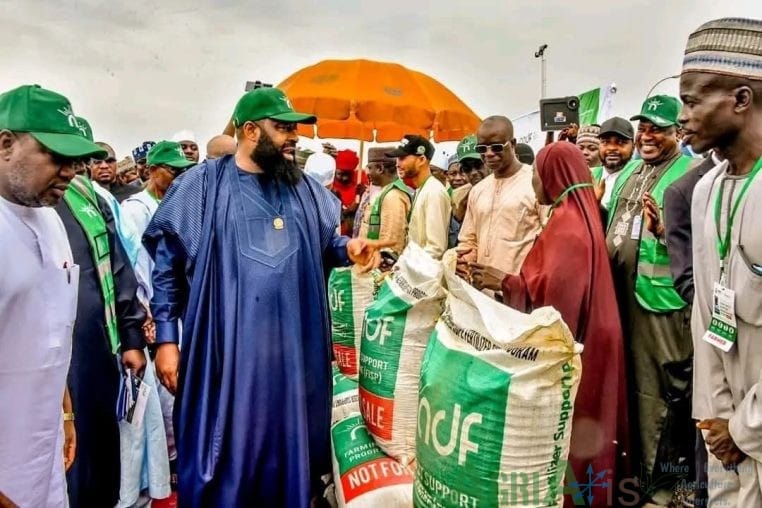
 The National Agricultural Development Fund has flagged off its Farm Input Support Programme for the North Central geo-political zone in Minna, Niger State, putting 80,640 bags of subsidised NPK fertiliser into the hands of 20,160 smallholder farmers across Niger, Benue, Nasarawa, and Kwara States — timed to meet peak fertiliser demand at the start of the rainy season.
The programme, known as FISP, targets priority food security crops. Farmers in Niger State will receive support for rice, maize, and yam production. Those in Benue State are covered for rice, yam, and soybean cultivation. The breakdown for Nasarawa and Kwara was not disclosed at the event.
Mr. Mohammed Abu Ibrahim, Executive Secretary and CEO of NADF, was direct about what the programme is not. “FISP is not fertiliser distribution for the sake of distribution,” he said at the flag-off ceremony on Tuesday. “It is targeted support designed to get fertiliser to the right farmers, for the right crops, at the right time.”
That distinction matters. Nigeria’s fertiliser intervention history is crowded with programmes that announced large numbers at flag-offs and delivered far less at the farm gate — diverted by middlemen, resold at market prices, or simply untracked after distribution. Mr Ibrahim said NADF has addressed this directly. All fertiliser bags under FISP are branded “NOT FOR SALE,” made in Nigeria, fully traceable, and mapped to verified beneficiaries through a screening process involving stakeholder engagement before any bag moved.
“The real success of this programme will not be measured by today’s ceremony but by what happens on the farms in the coming months,” Ibrahim said.
Mr. Aliyu Abdullahi, the Minister of State for Agriculture and Food Security, described the timing as deliberate. The rainy season is when fertiliser demand peaks across the North Central zone, and delayed delivery — a recurring problem in past subsidy cycles — effectively nullifies any benefit to farmers already mid-planting. Getting inputs to the field before or at planting, not after, is what separates a functional subsidy from a headline.
Gov. Mohammed Umaru Bago of Niger State attended the ceremony and commended the federal intervention, describing smallholder input support as one of the most direct routes to increasing food production and rural income simultaneously.
The minister confirmed that similar FISP roll-outs are planned for other geopolitical zones as part of a broader federal push to lift domestic food production and reduce the import pressure that has kept food prices elevated since 2023.
Nigeria spent an estimated $2.34 billion on food imports in a recent period, a figure farmers have cited repeatedly as evidence that domestic production support has not kept pace with demand.
Whether FISP delivers on its numbers will become clearer in the harvest months. NADF says it is committed to tracking outcomes and using field evidence to shape future cycles. That commitment to evidence, if applied consistently, is itself a departure from how most Nigerian agricultural programmes have been managed.
The North Central zone feeds a significant share of Nigeria’s staple crop supply. What happens on those farms between now and October will matter beyond the farms themselves.