 Written by
 The Federal Government has told pastoralists across Nigeria that nomadic livestock production is no longer sustainable and must give way to sedentary ranching.
This came as plans to develop 417 grazing reserves nationwide to provide a structured alternative to open grazing was disclosed.
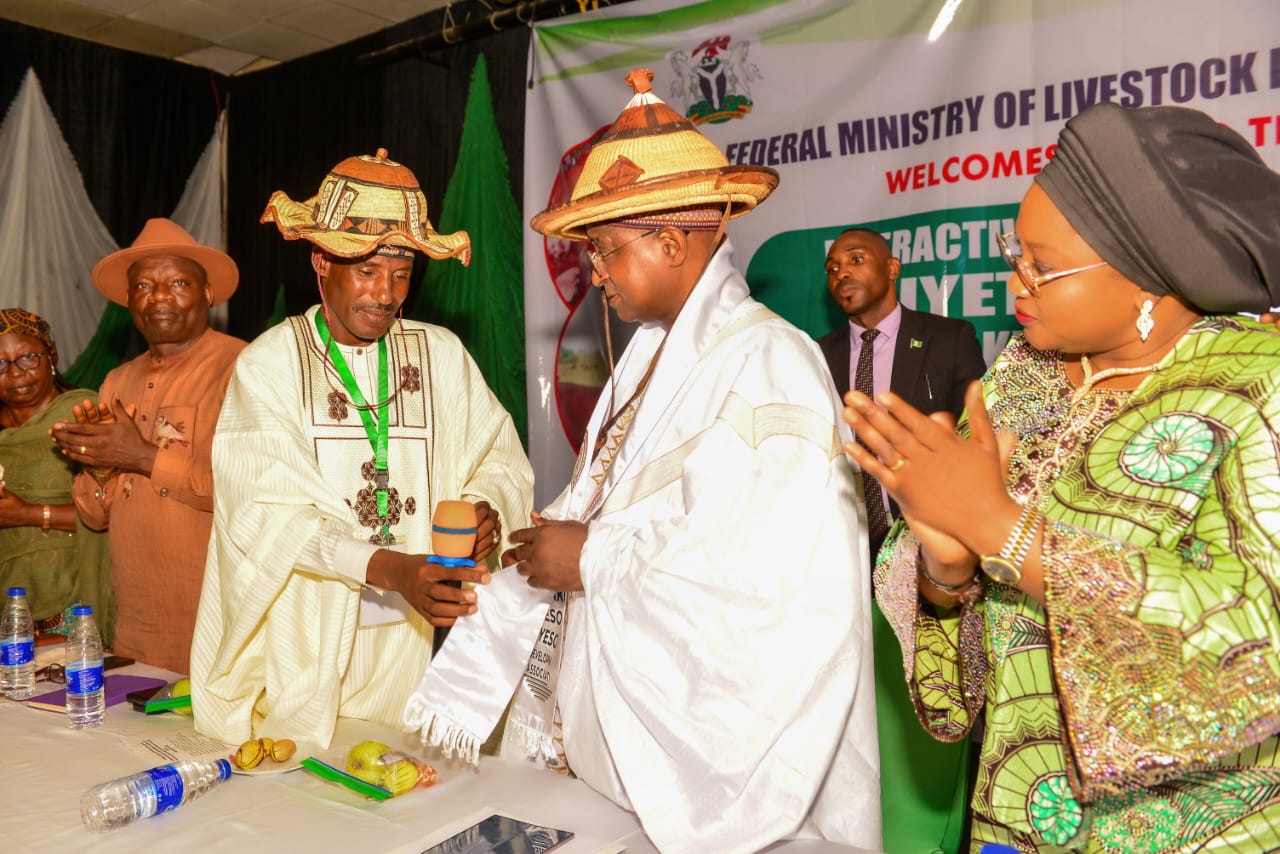
Dr. Idi Maiha, Minister of Livestock Development, made the call Thursday during an interactive session with the Miyetti-Allah Fulaku Yeso Yeso Development Association (MAFYDA) in Abuja, one of the most direct official statements yet on the government’s position on a practice that has driven farmer-herder conflict across Nigeria for years.
Dr. Maiha did not couch the message in diplomatic language.
“Natural grasslands are no longer readily available and animals are highly malnourished in many parts of the country,” he said.
“Adoption of sedentary livestock production is essential and must be embraced by pastoralists.”
He attributed the collapse of viable open grazing routes to population growth, the expansion of crop cultivation, and the accelerating effects of climate change on grassland availability, three pressures that have been building simultaneously and show no sign of reversing.
The 417 grazing reserves are the government’s primary answer. Dr. Maiha said the ministry is currently working with state governments to develop the reserves with adequate feed, veterinary services, and water supply.
Pastoralists would be able to acquire land within the reserves for individual or community ranches, confining production to designated areas rather than migrating across farmland and settlement boundaries.
“Pastoralists can acquire land within grazing reserves for ranching purposes,” he said. “These can be individual or community ranches where livestock production takes place within designated grazing areas.”
The ranching model, if adopted at scale, would represent a fundamental restructuring of how a significant portion of Nigeria’s livestock economy operates. Nigeria has an estimated 19.5 million cattle, 43 million goats, and 29 million sheep, the majority managed by pastoralists whose seasonal migration routes now cut through farmland in nearly every geopolitical zone. (White House) The farmer-herder conflicts those movements generate have resulted in hundreds of deaths and billions of naira in crop losses annually, particularly across the Middle Belt states.
MAFYDA’s National President, Alhaji Abubakar Suleiman, whose speech was read by National General Secretary Mr. Moh’d Dodo, said the association was committed to peaceful coexistence and supported the development of modern grazing reserves. He also called for the establishment of an Office of Special Assistant to the President on Fulani Matters, structured engagement with security agencies including the Office of the National Security Adviser, the Department of State Services, the Nigerian Army, and the Nigeria Police Force, and government support for youth employment within the livestock value chain.
The request for formal security engagement is notable. It signals that MAFYDA sees the conflict not only as a land access problem but as a protection problem, one where pastoralist communities believe they need institutional security backing to commit to sedentary arrangements that leave them fixed in one location rather than mobile.
Dr. Maiha said the Federal Ministry of Livestock Development, created by President Bola Tinubu in July 2024, was focused on moving the livestock sector from the informal to the formal economy. “The goal is to ensure the sector contributes significantly to the GDP, creates jobs for millions of youths and produces enough meat, dairy and other animal products for domestic and export markets,” he said.
Whether 417 grazing reserves can be developed fast enough, and with sufficient infrastructure, to make ranching a credible alternative for the majority of Nigeria’s pastoralists is the question the policy has not yet answered. The grazing reserve model has been proposed in various forms since the 1960s. Land acquisition, state government cooperation, funding, and the willingness of pastoralist communities to commit to fixed locations have each stalled previous attempts at different points.
The minister asked pastoralist organisations to begin sensitising their members now. That sensitisation work, not the announcement of the reserves, will determine whether this iteration of the policy moves further than the ones before it.