ActionAid Nigeria has reached more than 135,000 smallholder farmers, women, and youths across several states with training in agroecology and climate-resilient farming, the organisation’s Country Director, Mr. Andrew Mamedu, said Wednesday in Abuja.
Mr. Mamedu disclosed this at a national town hall meeting on the Land Use Act and alternative frameworks for land access and control for smallholder women farmers and young people in agroecology.
The training was implemented through the Strategic Partnerships for Agroecology and Climate Justice in West Africa (SPAC), a programme designed to equip farming communities with practical skills while pushing for changes in how land is accessed and controlled across Nigeria.
“Land remains central to agroecology, resilience, and sustainable livelihoods,” Mr. Mamedu said, adding that without secure access to land, millions of farming households can’t translate acquired skills into lasting agricultural output.
The milestone isn’t only in numbers trained. ActionAid recorded land allocations in communities across states. Community leaders gave three hectares to the Ojoloro Agbe Farmers’ Cooperative in Ugbe community, Akoko North-East Local Government Area. The Delta State Ministry of Agriculture allocated another three hectares in Ibusa for an agroecology model farm. Earlier this year, the traditional ruler of Akoko North-West Local Government Area provided one hectare to the Oke-Agbe/Irun Farmers Group, giving the group a physical base to practise what they’ve been taught.
Ms. Funmi Olukeye, ActionAid’s Director of People and Culture, who represented the Secretary General at the event, described the scale of the work as a reflection of the organisation’s commitment to inclusive agricultural development.
“We have supported over 135,000 smallholder farmers, women, and young people through our agroecology and climate justice programmes,” she said.
She warned, however, that structural barriers persist. Women and youth farmers continue to face land insecurity, gender inequality, and competing land uses that prevent them from fully capitalising on training, no matter how well delivered.
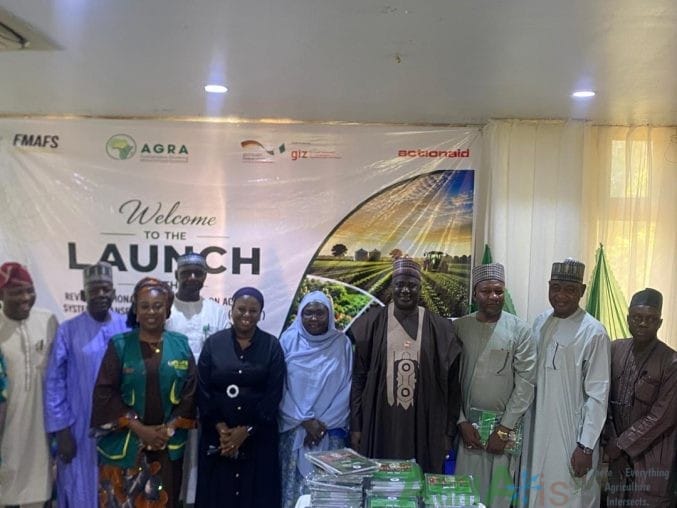
The town hall brought together officials from the Federal Ministry of Agriculture and Food Security, civil society organisations, farmers’ groups, and development partners. The session examined needed reforms to Nigeria’s Land Use Act and what alternative frameworks could make land access fairer for smallholder farmers who currently sit outside formal land ownership systems.
The stakes are clear. The UN World Food Programme reports that a record near-35 million Nigerians are facing food insecurity, driven by conflict, climate shocks, displacement, and the systemic collapse of local food systems.
ActionAid’s agroecology work targets this at the grassroots, building what it calls practical skills and institutional support for farmers who can’t wait for national policy reforms to catch up with their reality.
Source: News Agency of Nigeria (NAN). ActionAid Nigeria press statement.
AgriAxis.ng has previously reported on Nigeria’s topsoil crisis and the World Bank’s $500m AGROW project targeting smallholder farmers.