
 Written by
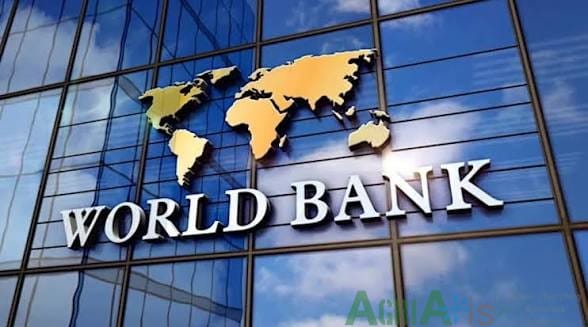
 The World Bank has approved a $500 million International Development Association credit, for the Nigeria Sustainable Agricultural Value-Chains for Growth Project, known as AGROW, targeting up to one million smallholder farmers across the country over the next six years.
The project would run from 2026 to 2032 and would focus on four critical crops where Nigeria’s food import bill is heaviest: rice, maize, cassava and soybeans.
It will support agribusinesses that commit to buying from smallholder farmers through a results-based matching grant facility that covers aggregation, post-harvest handling, agro-processing and market access.
Beyond market linkages, AGROW will fund agricultural research and extension services, expand access to climate-resilient seeds, build a national digital farm and farmer registry, and provide farmers with localised weather and climate advisory services.
The project also targets improvements in seed and fertilizer regulatory systems, early-generation seed supply and transparent land-based investments.
Mr. Mathew Verghis, the World Bank Country Director for Nigeria, said the project is expected to draw an additional $220 million in private agribusiness investment alongside the public funding.
“This project is expected to benefit up to one million smallholder farmers, mobilize significant private investment and increase yields across targeted crops,” Mr. Verghis said.
“At the same time, it will help to ensure improved food and nutrition security and greater resilience to climate shocks among farmers in the participating states across Nigeria.” He added.
The project places particular focus on women and youth, requiring strong coordination, citizen engagement mechanisms and inclusion targets throughout implementation.
AGROW is part of the World Bank’s broader Agriconnect initiative, which is designed to shift smallholder farming across Africa from subsistence production to commercially viable agribusiness.
Nigeria’s participation ties directly into the federal government’s priority to raise agricultural productivity, generate rural employment and reduce dependency on food imports.
The country’s food import bill averaged nearly $5.59 billion annually between 2021 and 2023, according to data from the United Nations Conference on Trade and Development.
The approval comes weeks after the World Bank also backed the $500 million Sustainable Power and Irrigation for Nigeria (SPIN) project, which aims to rehabilitate 40,000 hectares of irrigated farmland and address the situation affecting roughly a quarter of Nigeria’s irrigated land each year.
Together, the two interventions represent a billion dollars in World Bank commitments to Nigeria’s agricultural and water sectors within the first quarter of 2026 alone.
Whether the funds translate into measurable yield gains will depend on how quickly the digital farmer registry becomes operational and whether extension services reach farmers in conflict-affected states where food insecurity is most severe.

Mentions