 Written by
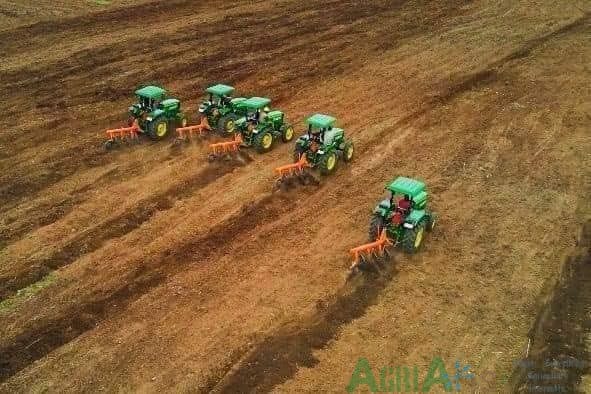
 Nigeria is losing 24 million tonnes of topsoil every year to erosion and land degradation, and the farms that feed over 200 million people are sitting on less ground than they were last season.
Dr. Aliyu Abdullahi, Minister of State for Agriculture and Food Security, disclosed this figure on April 29, 2026, in Abuja at the unveiling of the Global Project – Soil Matters, a joint initiative aimed at reversing the country’s soil health crisis before it compounds an already fragile food security situation.
“Soil is not merely the dirt beneath our feet; it is the cornerstone of our food security, economy and climate resilience,”
Dr. Abdullahi said at the event. He noted that over 70 percent of Nigerians depend on agriculture, yet the rate at which productive soil is disappearing from the country’s farmlands poses a direct risk to the ability of those farmers to produce food.
Why this number matters
Topsoil is the thin, nutrient-rich layer where crops grow. It takes roughly 500 to 1,000 years to form a single inch of it naturally.
Nigeria is currently losing it at a rate that farming interventions, fertiliser subsidies, and seed distribution programmes cannot compensate for on their own, because the problem is not what is going into the soil. It is that the soil itself is leaving.
Dr. Abdullahi said healthy soil determines water retention, drought resistance, and the land’s ability to store carbon, making soil degradation as much a climate issue as it is a farming one.
The warning came less than a week after Nigeria and Germany jointly launched a $2.2m soil health audit covering 774 laboratories across the country, a story AgriAxis reported on May 5.
The two announcements together indicate that the federal government is treating soil health as a coordinated emergency rather than a sector-specific concern.
What the Global Project; Soil Matters involves
The project focuses on restoring soil organic matter as a direct response to rising climate shocks.
Officials did not release full implementation details at the April 29 event, but the ministry’s framing positioned it as part of a broader push to build climate resilience into Nigeria’s agricultural base rather than responding to crop failures after the fact.
The timing is deliberate. Nigeria’s planting season runs from April through June across most of the country’s farming belt.
Addressing soil condition at the start of the season, rather than at its end, is the only window where the intervention has a chance to matter this year.
Source: News Agency of Nigeria (NAN) | nannews.ng