 Written by
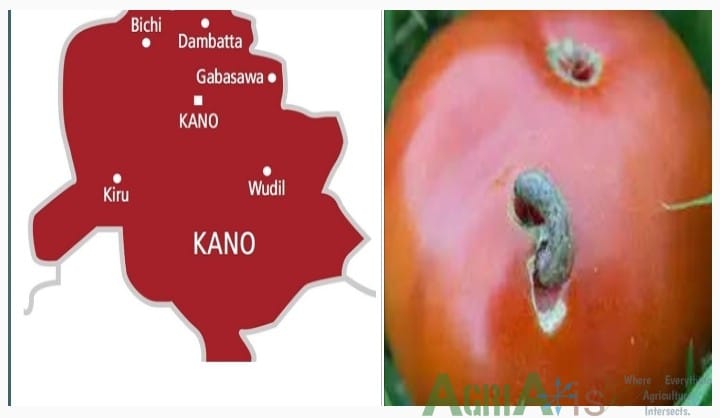
 The Kano State House of Assembly has raised an alarm over the spread of Tuta Absoluta, a highly destructive tomato pest currently ravaging major farming communities across the state, warning that the infestation poses serious food security consequences for Kano and the country at large.
The alarm was raised during plenary on Wednesday by Mr. Ahmed Ibrahim, Chairman of the House Standing Committee on Agriculture and Natural Resources, while presenting the committee’s findings on the growing outbreak.
The committee was mandated to investigate after Mr. Ali Lawan Kiyawa moved a motion of urgent public importance citing the alarming spread of the pest in communities within his constituency.
The infestation has reached at least ten local government areas. Affected farming communities include Bagwai, Shanono, Rogo, Tofa, Bunkure, Kura, Garun Malam, Rano, Kibiya, and parts of Tudun Wada and Dawakin Kudu local government areas, covering a wide stretch of Kano’s most productive tomato-growing belt.
Tuta Absoluta, also known as the South American tomato moth, attacks tomato crops at every stage of growth, destroying leaves, stems, flowers, and fruits simultaneously.
Uncontrolled infestations can wipe out an entire farm’s output within weeks. The pest first entered Nigeria through imported seedlings and has previously caused up to 100 per cent crop loss in severely affected farms.
“The outbreak has severe consequences, not only for farmers but for the state and the nation as a whole, causing a shortage of tomatoes and driving up prices nationwide,” Mr. Ibrahim told the House.
The committee urged the state government and relevant stakeholders to take immediate and coordinated action to contain the spread before further losses are recorded.
The timing sharpens what is already a serious national supply problem. AgriAxis.ng reported last week that a 50-kilogram basket of tomatoes has tripled in price, rising from N35,000 to between N115,000 and N125,000 in Lagos markets, after the northern harvest season ended and transport costs spiked to N2 million per trailer.
The Tomatoes Growers and Processors Association of Nigeria (TOPAN) projected that fresh harvests from July would stabilise supply, with prices easing from August.
That projection assumed Kano’s farms would produce. If the Tuta Absoluta outbreak is not contained before the next planting cycle reaches fruition, the July harvest TOPAN is counting on will fall short of what the market requires, and the August price relief may not arrive on schedule.
Kano is not a peripheral supplier. The state is among Nigeria’s largest tomato-producing regions, with farms in the affected local government areas supplying markets as far as Lagos, Port Harcourt, and Abuja. A season-level failure in Kano’s tomato belt would be felt at every market in the country.
The committee’s report stopped short of announcing specific government interventions or emergency funding for affected farmers. Whether the state executive acts on the assembly’s warning before the pest advances further into the planting season will determine how much of Kano’s next harvest survives.