 Written by
 Nigeria’s Livestock Productivity and Resilience Support Project (L-PRES) has exceeded its initial beneficiary target, reaching more than 1.44 million Nigerians since inception.
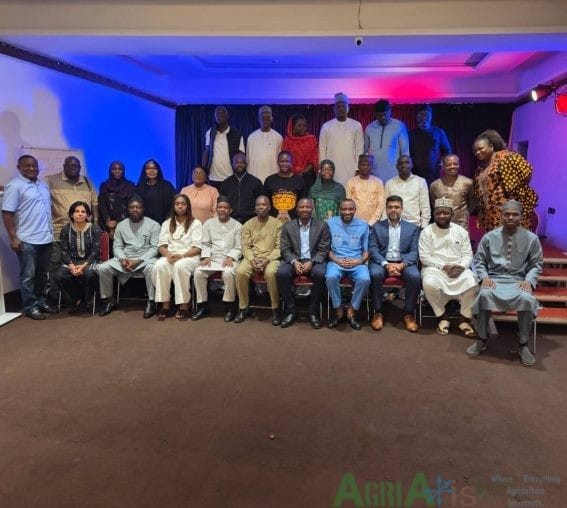
This was made known by the project’s National Coordinator, Dr. Sanusi Abubakar, on Tuesday at the project’s mid-term review meeting in Abuja.
The figure surpasses L-PRES’s original target of 1.43 million beneficiaries.
Of those reached, 546,000 are women and 903,000 are men, spread across participating states through training, advisory services, vaccination campaigns, pasture development, infrastructure support, and input distribution.
The numbers behind the headline are more telling. Milk production per cow has risen from 274.5 litres to 375.9 litres annually, a 37 per cent improvement.
Cattle carcass weight has moved from 135 kilograms to 160 kilograms, an increase of nearly 19 per cent. Sheep production has gone from 14.22 kilograms to 21.43 kilograms.
These are not projections. They are recorded outcomes from farmers inside the programme.
More than 388,000 farmers have received agricultural services under L-PRES, while over 101,000 have adopted improved livestock technologies.
The project has also trained 6,184 personnel, including extension workers, veterinary officers, and artificial insemination technicians who are now active in service delivery across the country.
A total of 1,492 farmers have benefited from artificial insemination services, with over 3,489 cattle already inseminated.
The animal health component is where L-PRES is now pushing its most ambitious target.
Dr. Abubakar said the project is working to scale annual vaccine production at the National Veterinary Research Institute (NVRI) from 150 million to 850 million doses, nearly six times the current capacity.
To support that scale-up, L-PRES has already established a 40-million-dose strategic vaccine storage facility in the Federal Capital Territory, alongside additional regional cold chain infrastructure across participating states.
The vaccination work to date covers 23.3 million animals. That includes over 10 million cattle, 9.1 million goats and sheep, and more than 4.1 million poultry birds, protected against anthrax, Contagious Bovine Pleuropneumonia (CBPP), Peste des Petits Ruminants (PPR), and Foot and Mouth Disease (FMD). Disease outbreaks in any one of these categories can devastate entire herds and collapse household incomes in rural communities within weeks.
Beyond animal health, L-PRES has constructed seven model veterinary hospitals, three of which are complete and commissioned, with 13 others at various stages of completion.
The project has also completed rehabilitation of the National Feed Reference Laboratory at the University of Ibadan and commenced construction of additional laboratories at Nasarawa State University, Keffi, and Michael Okpara University of Agriculture, Umudike, Abia State.
Feed multiplication facilities, hay barns, boreholes, and water systems at the National Animal Production Research Institute (NAPRI) in Zaria have also been upgraded.
Feed constraint is one of the project’s identified weak points. Dr. Abubakar named it directly: inadequate feed availability remains a major challenge in Nigeria’s livestock production, and the NAPRI infrastructure upgrades are designed to begin pushing against that limit.
The World Bank Task Team Leader for L-PRES, Dr. Menniviel Sene, also made it known in the meeting that faster implementation was needed to secure sustainable results.
The meeting was attended by World Bank officials, state project coordinators, the Nigerian Institute of Animal Science, the Veterinary Council of Nigeria, and the Food and Agriculture Organisation.
L-PRES is funded by the World Bank to the tune of $500 million over six years and aligns with the Federal Government’s Livestock Transformation Agenda under President Bola Tinubu’s Renewed Hope Agenda.
It operates alongside the National Livestock Growth Acceleration Strategy (NL-GAS 2025-2035), which targets growing the livestock sector’s overall economic contribution from $32 billion to $74 billion by 2035.
Source: News Agency of Nigeria (NAN), May 13, 2026.