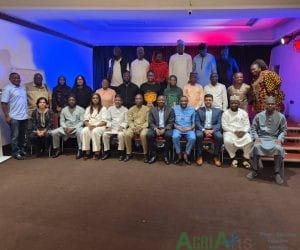
Nigeria’s $500 million World Bank-funded L-PRES project has surpassed its 1.43 million beneficiary target, vaccinated 23.3 million animals, and is now scaling national vaccine production from 150 million to 850 million doses annually, the project’s mid-term review has found.

 Written by S David Prince
NITDA and IDCA have signed a three-year strategic partnership to build the Nigeria Digital Triangle, a network of AI-enabled hyperscale data centres anchored in Nigeria’s Sovereign Cloud initiative, with structured investment, regulatory standards, and a national digital skills programme.
 Written by S David Prince
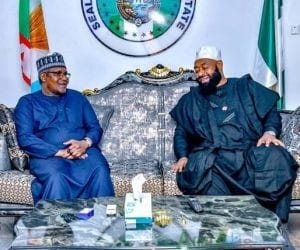
Dangote Rice Limited has committed to offtake 1 million metric tons of paddy rice from Niger State over 10 years as its 32 metric-ton-per-hour rice mill in Wushishi continues construction, with Niger State required to develop 25,000 hectares of commercial rice farms in return.
 Written by S David Prince
CAFS Africa and Nigeria’s NSPRI have unveiled a UNDP-backed project combining solar dryers with blockchain technology to cut Nigeria’s annual post-harvest losses, estimated at between 30 and 50 per cent of all perishable produce.
 Written by AgriAxis.ng
Rep. Terseer Ugbor, Deputy Chairman of the House Committee on Environment, has received the 2025 Industry Enabler Award from the Recyclers Association of Nigeria for championing EPR legislation and waste management initiatives.
 Written by AgriAxis.ng
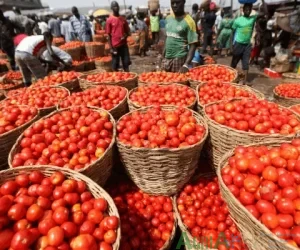
A 50kg basket of tomatoes that sold for N35,000 last month now costs up to N125,000 in Lagos markets, as the harvest season ends across northern Nigeria and transport costs hit N2 million per trailer, TOPAN warns.
 Written by S David Prince
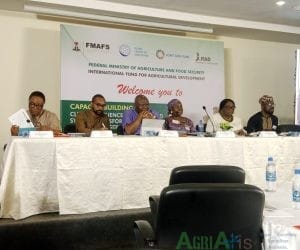
Nigeria and IFAD have begun capacity building for federal and state actors to access climate finance under the $158 million Value Chain Programme in Northern Nigeria, with training grounded in Climate Risk and Vulnerability Assessment across nine states.
 Written by S David Prince
Over 11.5 million rural Nigerians have benefited from improved road access under RAAMP, with 1,500 kilometres of rural roads completed and another 2,500 kilometres targeted by December 2026, the Minister of State for Agriculture and Food Security, Sen. Dr. Aliyu Sabi Abdullahi, said in Abuja.
 Written by AgriAxis.ng
The Federal Ministry of Livestock Development has trained 100 small-scale dairy farmers in Ibadan on best practices, as Nigeria works to double annual milk output to 1.4 million metric tons by 2030 under the National Livestock Growth Acceleration Strategy.
 Written by AgriAxis.ng
The World Agriculture Forum Nigeria has inaugurated a Country Council in Abuja to drive coordinated action on agriculture, food systems, and rural development, with Executive Director Dr. MJ Khan calling it a turning point for Nigeria’s food security dialogue.