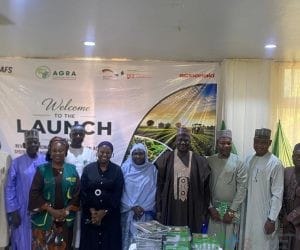
ActionAid Nigeria has trained over 135,000 smallholder farmers, women, and youths in agroecology and climate-resilient farming across several states, Country Director Mr. Andrew Mamedu announced at a national town hall in Abuja.
 Written by S David Prince
Nigeria’s Minister of State for Agriculture has warned that the country loses 24 million tonnes of topsoil annually to erosion and degradation, threatening food security for a nation where over 70 percent of the population depends on agriculture.
 Written by S David Prince
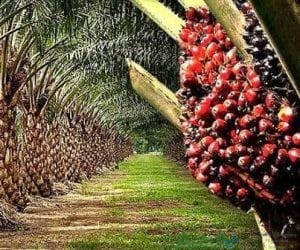
Nigeria produces 1.4 million metric tonnes of palm oil annually but needs over 2.5 million. The Federal Government has launched a national strategy to close that gap and cut its $600m annual import bill.
 Written by S David Prince
IFAD is seeking an implementing partner for its AgTech and FinTech Scale-Up initiative under the Innovatech programme. Eligible NGOs and organisations have until May 13, 2026 to apply.
 Written by S David Prince
NABG President Mr. Kabir Ibrahim told the Vanguard Economic Discourse 2026 that Nigeria’s food problem is not production but affordability, and that value addition is the fastest route to food security and economic stability.
Written by S David Prince
Nigeria and Germany have launched a $2.2 million audit of farmland soil health, targeting 774 soil testing laboratories and 10 million farmers by 2027. Here is what the NFSHS readiness assessment means for Nigerian crop yields and food security.
Written by S David Prince
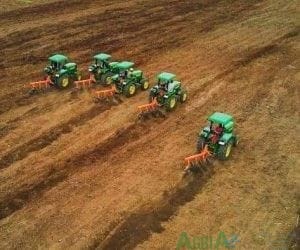
Niger State has flagged off its 2026 farming season with 250 tractors, 50 combine harvesters and 150,000 bags of fertiliser distributed across all 25 LGAs. Governor Bago targets 500,000 metric tons of food and 120,000 hectares of cultivated land this season.
 Written by S David Prince
Nigeria’s Minister of Livestock Development, Mr. Idi Mukhtar Maiha, has unveiled a 10-point strategy to grow the sector into a $74 billion economy by 2035. With protein deficiency and food inflation still acute, here is what the plan targets and what it will take to deliver.
 Written by S David Prince
The World Bank has approved a $500 million credit for Nigeria’s AGROW Project, targeting one million smallholder farmers across rice, maize, cassava and soybean value chains from 2026 to 2032. Here is what it means for Nigerian agriculture.
 Written by S David Prince
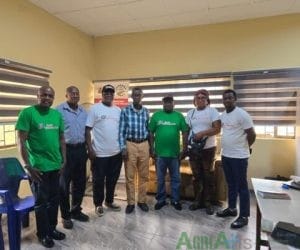
The promoters of the Iseyin Agric Value Hub met OYSADA in Ibadan on April 28, 2026, seeking government backing for a private agribusiness cluster in Oyo State. The real story is what the meeting’s agenda reveals about where private agricultural investment in Nigeria actually stalls.